
"coffee cultivation regions"
7000 article(s) found
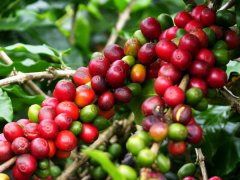
Which countries and regions can grow coffee? What conditions do you need to grow coffee?
Since coffee trees are tropical plants, they need to be planted in warm places. The main planting area is distributed between latitude 25 south and latitude 25 north with the equator as the center, so this area is also called the coffee belt. However, even in the coffee belt, Arabica and Robeska do not grow in exactly the same area, but grow up in an environment that is more suitable for their own growth.

Taste description of Colombian Huilan Coffee Bean introduction of Regional treatment method for Flavor Variety
The taste description of Colombian Huilan coffee beans the characteristics of the flavor varieties and the regional treatment method the Huilan area belongs to the mountain terrain, and the coffee is planted on the slopes of the canyon, so it has a high altitude and suitable temperature for growing high-quality Arabica beans. The climate of the canyon slope not only prevents the cold wind from blowing in, but also keeps the mountain breeze cool without high temperature, and Rain Water is also relatively sufficient.
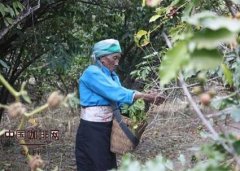
History of Coffee planting knowledge of Coffee Tree cultivation
In fact, the Arabs began to grow coffee in 525 BC, and chewing fried coffee beans became popular in the Arab region. In 890 AD, Arab merchants sold coffee beans to Yemen, and Yemenis made coffee beans into drinks for the first time. In the 15th century, coffee was introduced into Europe, Asia and soon into America. By the 18th century, tropical and subtropical regions around the world were widespread.
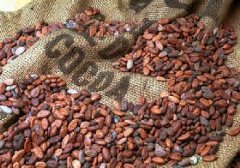
The basic knowledge of the History of Coffee cultivation
In fact, the Arabs began to grow coffee in 525 BC, and chewing fried coffee beans became popular in the Arab region. In 890 AD, Arab merchants sold coffee beans to Yemen, and Yemenis made coffee beans into drinks for the first time. In the 15th century, coffee was introduced into Europe, Asia and soon into America. By the 18th century, tropical and subtropical regions around the world were widespread.

Flavor description of Colombian Huilan Coffee Variety introduction of Regional treatment method for Manor production
Description of Coffee Flavor of Colombia huila Coffee from Colombia Variety introduction the Diamond Manor of Huilan, Colombia, located in the southwest of Colombia, is one of the major coffee growing areas. Because there are famous coffee cultivation places in Huilan area, the names of small areas become brand names and circulate. Although the cultivation in this area

The cultivation of coffee beans in Latin America Starbucks Latin American coffee beans
The cultivation of Latin American coffee beans Starbucks Latin American coffee beans Peruvian coffee is not common internationally, and it is generally believed that its processing process is hasty, so the evaluation is not good, which is the result of previous state monopoly. In fact, Peruvian coffee has good growth conditions, and many of them are grown organically, so the quality of coffee beans has always been quite good. The famous producing area of Peruvian coffee is

How is the cultivation of yellow bourbon single bean in Queen's Manor of Brazil?
For professional baristas, please follow the coffee workshop (Wechat official account cafe_style) * Brazil bar. West population: 201033000 Brazil grows many different varieties of coffee Many varieties are cultivated and evolved in China.

Flavor description of Colombian Xuefeng Coffee Bean introduction to the regional treatment of taste varieties
Description of the flavor of Colombian Xuefeng coffee beans one of the regional treatments is said to have come from the island of Haiti in the Caribbean and from El Salvador in Central America. Second: in 1808, a priest introduced coffee beans to Colombia for the first time from the French Antilles via Venezuela. One of the first coffee seeds in Colombia was made through the province of Santander.

Introduction to the grinding scale of the regional treatment method for the flavor and taste of Colombian Huilan
Colombian Huilan flavor characteristics, taste characteristics, regional treatment grinding scale introduces that Colombian coffee workers pick coffee beans (also known as coffee cherries) by hand up the mountain, so they can pick carefully and pick the most ripe and full fruits. And most of the coffee beans are washed with water, and the drink after moderate roasting has a light, silky taste, sometimes with
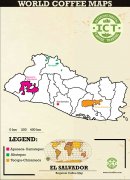
El Salvador coffee bean producing area Santa Ana, the volcanic country of El Salvador coffee cultivation.
Coffee is grown more or less throughout El Salvador (well, after all, it's not that big), but there are seven main areas where coffee is grown, all of which are considered different from each other, mainly in terms of altitude and flavor characteristics. According to PROCAF (the National Coffee Institute), it is arranged as follows: Apaneca-Ilamatepec Mountains: located in the west, from 500 elevations

Starbucks Coffee Bean Boutique Starbucks Coffee Bean Price Starbucks Coffee Bean Introduction
The region of Guatemala is ideal for coffee cultivation. The annual precipitation is also very sufficient. The alpine area above 1400 meters above sea level and the climate of Guatemala with humidity ratio maintained at 60~70% create a natural environment for cultivating high-quality coffee. The highest grade of Guatemala coffee is SHB ( Strictly Hard bean: Hard coffee bean grown in alpine regions). accordance with

Introduction to the regional treatment method for describing the taste and flavor of Colombian Huilan coffee varieties
Columbia Huilan Coffee Variety Taste and Flavor description the medium and deep baking degree of Huilan Coffee is introduced. The instrument is Harrio V01, and the ratio of powder to water at 1:12 (that is, 25g coffee powder to extract 300ml coffee liquid) is selected. It seems random, but in fact, according to the baking degree of beans and the release of substances with good coffee powder, priority extraction is selected.

Fresh and elegant Santo Domingo boutique coffee bean cultivation geographical location, climate, good altitude
Carefully selected in this way, the high-quality Dominican coffee exudes a faint aroma and gives people a faint fruity aroma with a lingering finish and a smooth and smooth finish. To trace the origin of Tibica, we should first talk about the coffee trees originally planted in Martinique. These trees were planted by Dominicans as far back as the early 18th century, so Dominica began at that time.

What about the Colombian coffee region? Description of flavor characteristics of Colombian Huilan coffee
Professional coffee knowledge exchange more coffee bean information please follow Coffee Workshop (Wechat official account cafe_style) Coffee Workshop is located in southwestern Colombia and is one of the major coffee growing areas. Because there are famous coffee cultivation places in the Huilan area, the names of each small area have become brand names and circulated. Although the cultivation conditions in this area are also

A brief introduction to the cultivation of fine coffee beans in Santo Domingo with excellent acidity, geographical location, climate and altitude
In the early 18th century, coffee was introduced to Domiga from Martinique, and fine coffee was produced in the north represented by Hibao and in the south, including Okayabani Santo Domingo. Among them, the coffee produced by Santo Domingo and Barney, which is almost synonymous with domiga coffee, is a world-famous high-quality coffee. Santo Domingo coffee, which is characterized by freshness and elegance,

Flavor description of Colombian Xuefeng Coffee beans introduction to the varieties treated in the region of manor production
Columbia Xuefeng Coffee Bean Flavor describes the taste of Colombian coffee produced by the manor region. Colombian coffee has a silky taste. Colombian coffee is equated with high quality and good taste. It is sweet in acid, low in bitterness, rich in nutrition, and has a unique sour and mellow taste. The sour, bitter and sweet flavors of Colombian super coffee match well.

Guatemala Pacamara Coffee Bean Characteristics Flavor Description Grind Scale Production Region Variety Introduction
Guatemala Pacamara coffee beans characteristics flavor description grinding scale production area variety introduction In the coffee world, each producing country is divided into a number of producing areas, different producing areas will have a large number of manors, manors planted coffee varieties and processing methods are different, the final coffee flavor will be different, even the microclimate of the origin is also ingeniously affecting the quality of coffee.

Flavor characteristics of Rosa Coffee Regional characteristics of cultivation what are the producing areas of Rosa Coffee except Panama
Professional coffee knowledge exchange more coffee bean information Please follow the coffee workshop (Wechat official account cafe_style) because transliteration is the same as Japanese geisha, and have the name of geisha coffee, but many baristas do not like this title, they think that this coffee should not be given the impression of a Japanese geisha, so more and more people use the name Rosa

Yunnan coffee beans cultivation areas and processing methods Introduction Arabica coffee washing and sun flavor difference
Pay close attention to the coffee comment (Weixin Official Accounts vdailycom) and find a beautiful coffee shop to open its own shop Yunnan coffee beans about the geographical production area is the embodiment of flavor about Asia/Pacific region mellow, sweet, smooth, with herbal fragrance and earthy fragrance. Coffee producing areas in Asia/Pacific include India

A brief introduction to the cultivation of pure and gentle Santo Domingo boutique coffee beans, geographical location, climate and altitude
To trace the origin of Tibica, we should first talk about the coffee trees originally planted in Martinique. These trees were planted by Dominicans as far back as the early 18th century, so Dominica began growing coffee as early as that time. For a time, the Caribbean was almost synonymous with coffee production, but in recent years Cuba, Haiti and other producing areas have been severely damaged by Hurricane George.